Skylark Vocal Ensemble
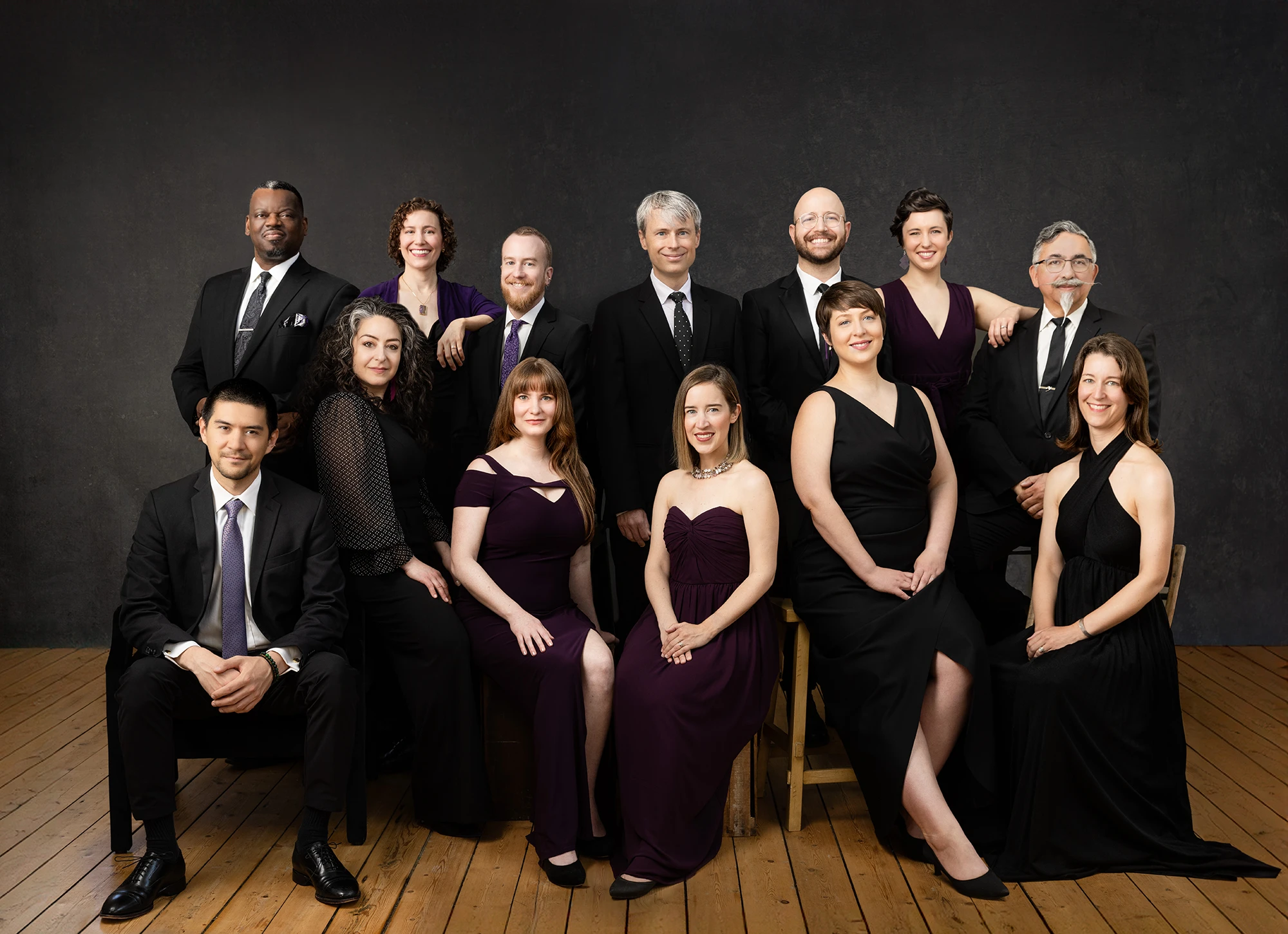
Skylark is a six-time GRAMMY®-nominated professional vocal ensemble known for extraordinary singing and for concerts that push beyond the conventions of traditional choral performance. Founded in 2011 by Artistic Director Matthew Guard and Carolyn Guard, Skylark brings together some of the country’s leading ensemble singers in programs shaped by history, literature, art, architecture, science, and place. BBC Radio 3 has called its singers “the cream of the American crop.”
Skylark began as a chamber ensemble centered on the expressive possibilities of exceptional individual voices singing together. Rather than maintaining a fixed ensemble, Skylark draws from a community of roughly thirty-five professional artists across the country, assembling a group for each project according to its particular musical and dramatic demands. Ensembles may range from four singers to twenty-six, typically coming together for an intensive seven to ten days of rehearsal, performance, and recording. The singers are not simply executors of a predetermined interpretation, but active collaborators in shaping the work.
Over time, the concerts themselves grew increasingly ambitious in form. Programs ranged across poetry and storytelling, mathematics, the natural world, war, and memory; narration and theatrical elements entered the concert experience; museums and historic buildings became more than venues. What emerged was a distinctive kind of vocal performance in which the music remained central, but everything surrounding it could become part of the experience.
That evolution has produced projects including Clear Voices in the Dark, which places Poulenc’s Figure humaine, composed in Nazi-occupied France, alongside songs of the American Civil War; Sub Rosa: Secrets Revealed, created with composer Gregory W. Brown and bestselling author Dan Brown around hidden symbols and codes in music; and A Christmas Carol, created with composer Benedict Sheehan as a continuous musical setting of Dickens’s story and performed with Christine Baranski. Of one Skylark program, The Boston Musical Intelligencer wrote that it had become “far more than a choral concert,” with programming that “achieved something genuinely profound.”
Place has become increasingly important to Skylark’s work. At the Met Cloisters, the ensemble has created candlelit programs for the museum’s medieval spaces. Its ongoing work at the Hispanic Society Museum & Library has drawn on the institution’s architecture, art, history, and musical manuscripts, including performances of Joby Talbot’s Path of Miracles. At the Morgan Library & Museum, projects have brought music into conversation with literature and visual art. Other performances have taken Skylark from historic churches and concert spaces in New England, New York, and Washington to St. John’s Smith Square in London.
Recording has been another central part of Skylark’s identity. The ensemble has made more than fifteen studio albums, earning six GRAMMY® nominations, including nominations for Best Choral Performance and Best Engineered Album, Classical. Its recordings are now distributed by LSO Live. Skylark’s performances and recordings have been featured by The New York Times, the Associated Press, NPR, the BBC, The Times of London, Gramophone, The Boston Globe, WQXR New York, and Limelight Australia. The Times has called the ensemble “gripping” and “brilliant”; Gramophone, “passionate,” “thrilling,” and “stunning.”
Skylark’s projects increasingly continue beyond the performances for which they were first created. Clear Voices in the Dark and A Christmas Carol are being developed for film, carrying experiences conceived for live audiences into a new medium. Houston Chamber Choir has given new performances of Skylark’s Once Upon a Time, while Harvard University has commissioned a choral-orchestral expansion of A Christmas Carol from Matthew Guard and Benedict Sheehan. Together, these developments mark a new chapter for an ensemble whose work is beginning to travel across ensembles, institutions, and forms.
Fifteen years after its founding, Skylark remains built around the same fundamental resource with which it began: remarkable individual voices joined in collective artistry. What has changed is the scale of the canvas around them, from recordings and chamber concerts to museums, narrative works, site-specific performances, collaborations, and film, each offering another way to experience what the human voice can do.